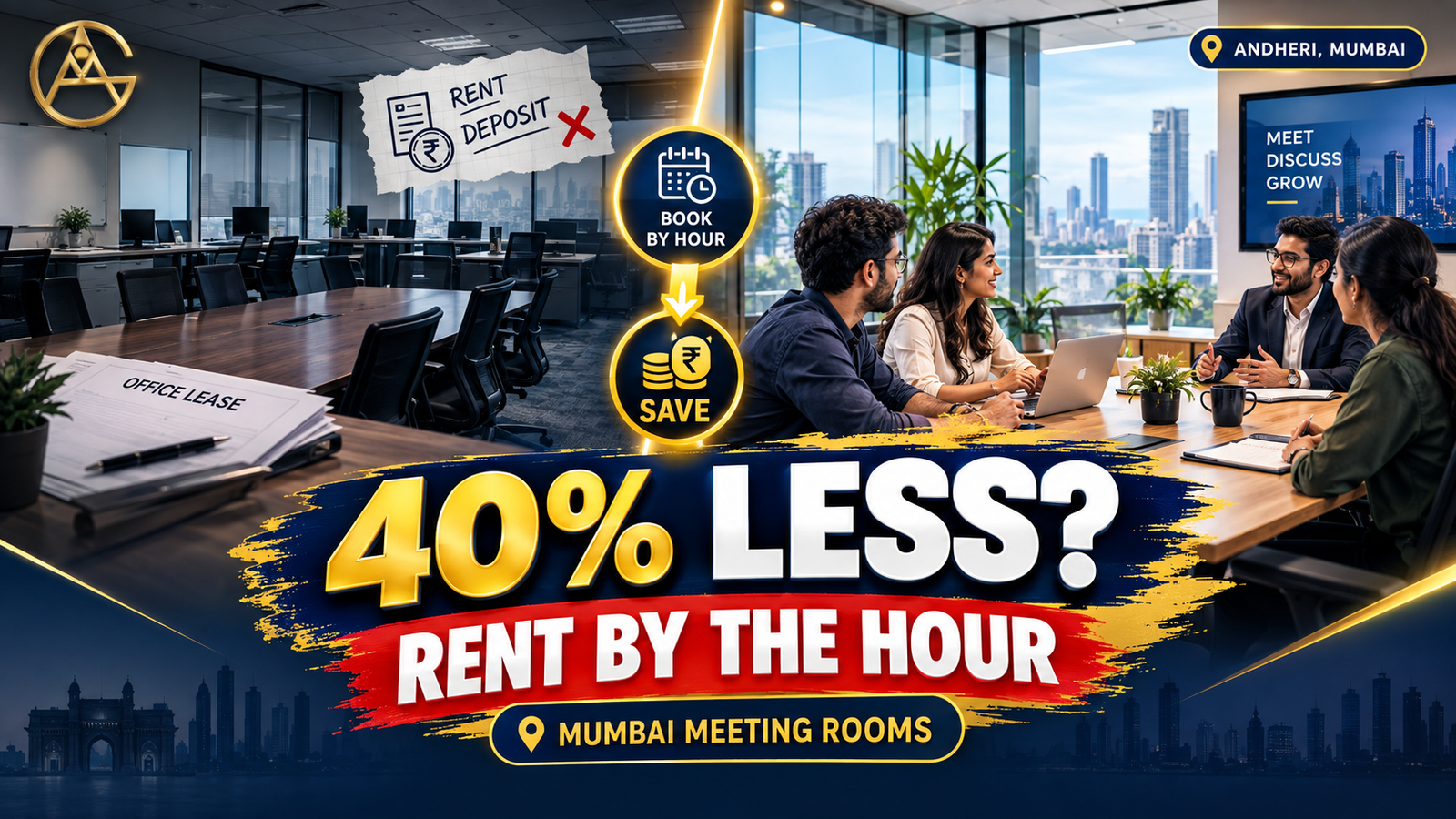
"Most small teams do not need an office. They need a good room for a few hours a week, and they are paying for a whole floor."
A founder we know once showed us her lease. A small office in Andheri, a fit-out she was still paying off, and a boardroom table she was proud of. Then she showed us her calendar. The boardroom had been used eleven times in a quarter. Everything else was people working from home.
She was paying full office prices for a room she used a couple of times a month. That gap is exactly where renting a meeting room by the hour starts to win. If you have ever wondered whether a cafe table or a leased floor was really your only choice, our piece on why a meeting room beats a cafe covers one side of it. This article covers the money side, with real numbers, honest assumptions, and the point where the maths flips.
What "Renting a Meeting Room" Actually Means
It is simpler than it sounds. A provider owns a furnished, ready-to-use room. You book it for the hours you need, you pay for those hours, and you walk out when the meeting ends. No lease, no deposit, no interior contractor, no electricity bill in your name. Rooms like this are part of the wider serviced office model, where the operator handles everything except your work.
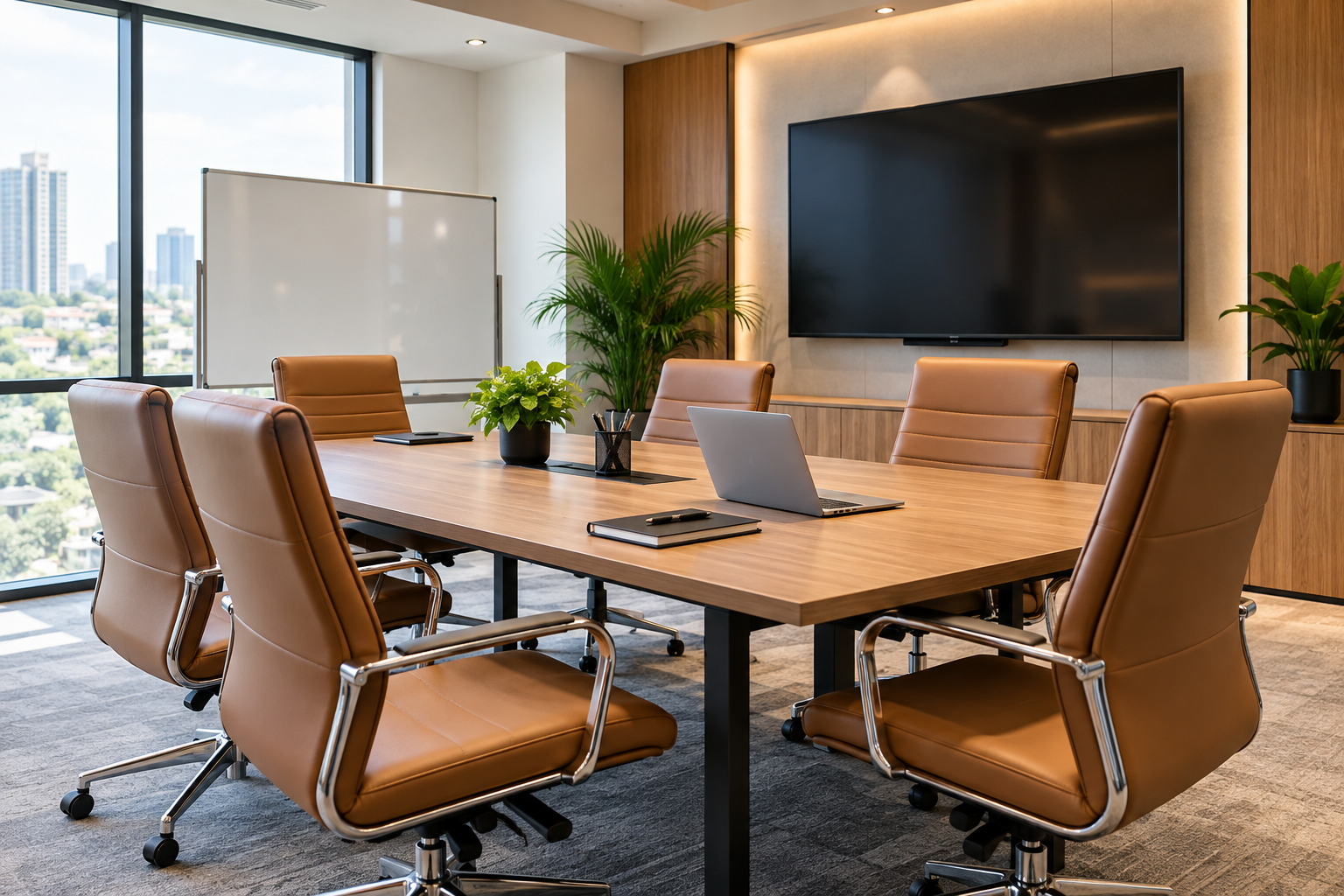
The room usually comes with seating, a screen or projector, fast internet, air conditioning, and someone at reception who makes your visitors feel expected. For a client pitch, that setting does a lot of quiet work on your behalf.
Think about the last time you walked into a meeting room that felt right. The chairs were comfortable, the screen worked on the first try, nobody was shuffling cables, and the person across the table was already relaxed. None of that happens by accident. Someone maintains it, and when you rent by the hour, you borrow that effort instead of building it yourself.
It also removes a quiet source of stress. When you host at your own office, you become the facilities team on the day: is the air conditioning on, has the projector been tested, is there water, who is at the door? A rented room hands all of that to someone whose job it is, so you can spend the ten minutes before a pitch thinking about the pitch.
The idea in one line
Renting a meeting room turns a fixed monthly cost into a pay-for-what-you-use cost, which is exactly what you want for something you only need a few hours at a time.
The Real Cost of a Traditional Office
Rent is only the first line. To keep a small office running just so you have a place to meet people, you pay for the space, the fit-out, the deposit tied up in your landlord's account, maintenance, utilities, internet, and housekeeping. Commercial rent levels in Mumbai are tracked closely by firms like knightfrank.co.in, and they vary a lot by micro-market, so treat any single figure as a starting point.
Where the Money Quietly Goes
A fit-out of a few lakhs spread over three years is a real monthly cost even though you paid it once. A deposit of six to ten months' rent is money that cannot work anywhere else. And a lock-in of three years is a promise you make on the day you know the least about your future team size. Then there are the small things nobody budgets for: someone to sign for couriers, cleaning supplies, the coffee machine, and repairs when the air conditioner fails in May. Each is small, and together they add up to a meaningful monthly number. We broke down those line items in detail in our guide to leasing, renting and coworking in Mumbai.
The Worked Example: Where the 40% Comes From
Let us put numbers on it. Take a six-person team that wants a professional place for client meetings, interviews, and the occasional planning day. They estimate about 40 hours of meetings a month. The figures below are illustrative assumptions, not a quote, so swap in real prices before you decide.
| Monthly cost item | Small leased office (400 sq ft) | Rented meeting room |
|---|---|---|
| Rent (about Rs 90/sq ft) | Rs 36,000 | Included in hourly rate |
| Maintenance (about Rs 8/sq ft) | Rs 3,200 | Included |
| Utilities, internet, housekeeping | Rs 8,000 | Included |
| Fit-out spread over 36 months | Rs 16,700 | None |
| Cost of deposit tied up | Rs 2,000 | None |
| Meeting hours (40 hrs at Rs 1,000) | Not applicable | Rs 40,000 |
| Total per month | about Rs 65,900 | Rs 40,000 |
That is a saving of about Rs 25,900 a month, or close to 40 percent, and it lands on your books without a single signature on a lease. The cost bands that matter most are broadly consistent with what firms like cbre.co.in publish for office markets, though your exact quotes will differ.
How We Got to the 65-Hour Break-Even
The break-even is simple division. The leased office in our example costs about Rs 65,900 a month whether you use it for 5 hours or 500. At Rs 1,000 an hour, that same money buys about 65 hours of rented room. Below 65 hours, renting is cheaper. Above it, the office starts to win. A team that genuinely uses a room for 100 hours a month should not rent by the hour, and this article is not trying to talk them into it.
It is also worth remembering what the office gives you that the meeting room does not: a permanent place for your things, a fixed address for your team, and a space you can shape. Those have real value. The point is only that if all you truly need is a good room a few hours a week, you should not pay for the rest.
Why the Saving Is Real, Not a Trick
The saving is not clever pricing. It comes from paying only for the hours you actually use a room, while a traditional office charges you for all 720 hours in the month, including the nights and weekends when nobody is there.
You pay for use, not for space
Idle hours cost nothing, so a quiet month does not hurt your budget.
No upfront cash tied up
No deposit, no fit-out, no interiors contractor to chase for months.
Start tomorrow
Book a slot and meet the next day, instead of waiting months for a lease and a build-out.
A room that always looks good
Someone else keeps it clean, cool, and working, so your clients always see it at its best.
This is the same logic behind the wider shift we covered in our look at why flexible offices are taking over: pay for what you use, when you use it.
When a Traditional Office Still Wins
Honesty matters here, because the maths does flip. If your team is in the room most of the working day, every day, a dedicated office will beat hourly rentals. In our example, that break-even sits at roughly 65 hours of meetings a month. Beyond that, you are paying more per hour than the office would cost you.
Run your own numbers
Everything above depends on the hourly rate you pay and the rent you would otherwise face. Get two or three real quotes, count your true monthly hours for a couple of months, and only then compare. If you sit above the break-even, a dedicated space or a coworking seat may serve you better, as we compared in our office lease versus coworking analysis.
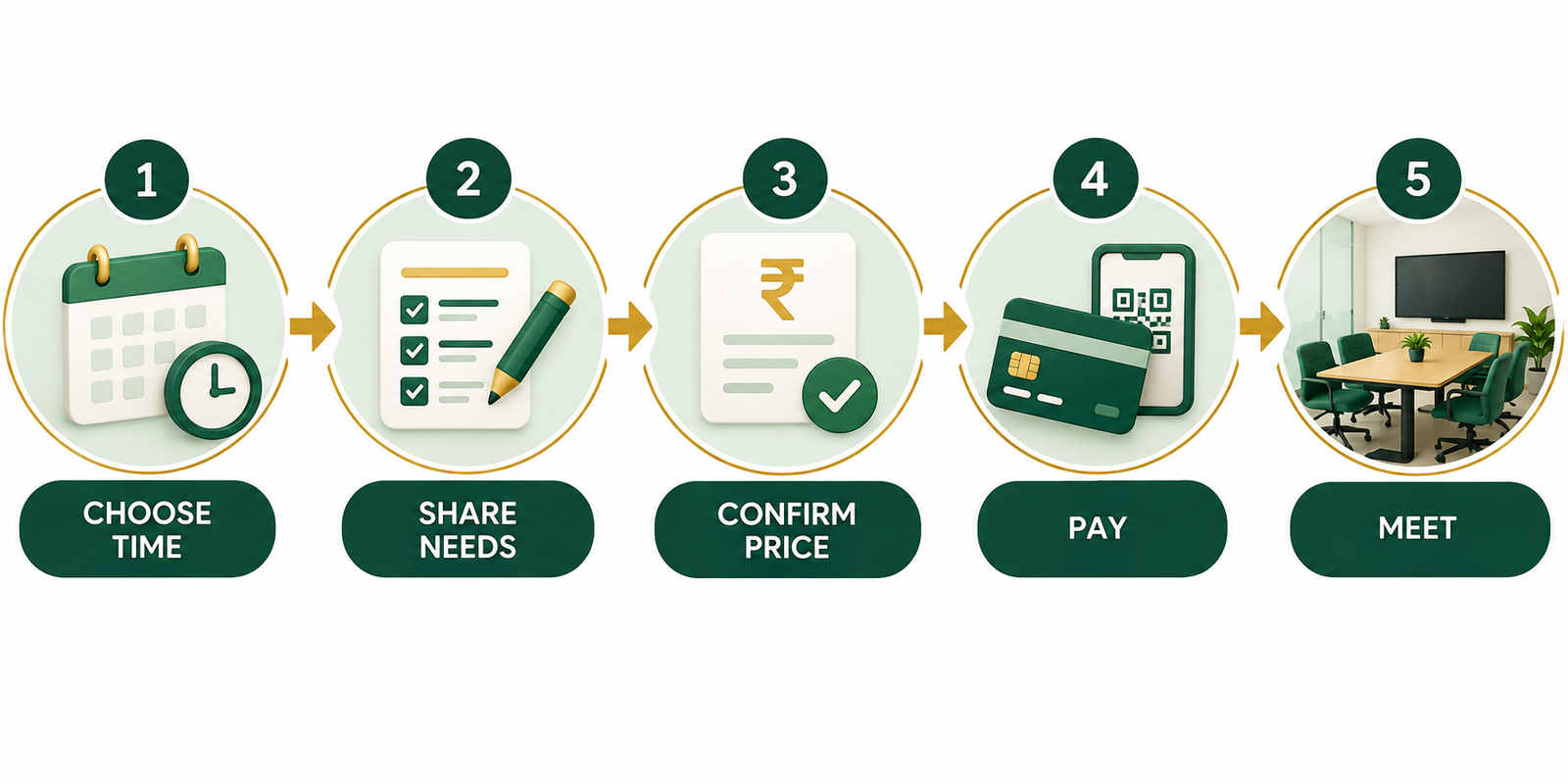
How Booking a Meeting Room Works, Step by Step
People assume it is complicated because a lease is. It is closer to booking a table at a restaurant. Here is the usual flow, and it takes less time than most people expect. A first booking can be sorted in a single phone call or message, and repeat bookings usually take a minute.
Decide your date, time, and headcount
Know how many people are coming and for how long. A room for four and a room for twelve are not the same product.
Share your requirements with the provider
Tell them about screens, video calls, refreshments, and anything special, such as a whiteboard or a presentation clicker.
Confirm availability and price
Get the hourly rate, the inclusions, and any extras in writing, so there are no surprises on the invoice.
Pay and receive your confirmation
You get a booking confirmation and, if you are GST-registered, a proper tax invoice for your records.
Arrive, meet, and leave
The room is set up before you walk in. When the meeting ends, you leave, and nothing follows you home.
What to Look For in a Meeting Room
Not every room is worth the fee. Before you book, check these things, and if you can, visit in person for a few minutes.
Tech That Actually Works
A large screen, reliable internet, and a working video setup matter more than a fancy table. Nothing sinks a pitch like a screen that will not connect. Business publications like hbr.org have long covered how meeting conditions shape decisions, and good technology is one of the easiest conditions to control.
Privacy, Noise, and Comfort
Glass walls look modern, but ask about sound. If you are discussing pricing or a confidential deal, you want a room where your conversation stays in the room. Temperature and seating matter too, because people who are uncomfortable rush decisions.
Meetings That Deserve a Proper Room
Not every conversation needs one. A quick catch-up over chai does not. But some meetings are worth the fee because the room shapes the outcome: client pitches, investor conversations, contract discussions, job interviews, and training sessions.
Client Pitches and Investor Conversations
When someone is deciding whether to trust you with their money or their project, the room is part of your pitch. A clean, quiet space with a proper screen tells them you are organised before you say a word. A noisy corner does the opposite.
Interviews and Sensitive Conversations
Job candidates notice where you meet them. A private room lets them relax and speak honestly, and it protects the confidentiality of everyone involved. For performance reviews and difficult conversations, privacy is not a luxury.
Training and Workshops
For a half-day session with a dozen people, a larger conference room with flexible seating and a good display makes the difference between an engaged group and a distracted one. You rent it for exactly the hours you need, and you do not carry the space for the other 29 days.
Hybrid meetings deserve a mention too, since mckinsey.com and other management researchers have written at length about how the shift to hybrid work changed where and how teams meet. When half your group is in the room and half is on a call, a proper videoconferencing setup with a good camera and microphone stops remote colleagues from feeling like an afterthought. For solo founders and remote teams, pairing a virtual office with on-demand rooms gives you an address and a meeting place without a lease.
The Tax and Paperwork Side
Renting a room is easy to account for. You receive a tax invoice, and if you are registered, you may be able to claim input tax credit. Because rules and rates change, confirm the current position on gst.gov.in before you plan around it.
Business expenses like this are usually recorded in your books as a normal operating cost, and the filing side sits with the Income Tax Department at incometax.gov.in. If you want a professional to look over the treatment, our note on CA and GST advisory support explains what that help looks like in practice.
Location: Why Andheri West Works for Client Meetings
A meeting room is only as useful as it is easy to reach. Andheri West sits near the metro, the Western Express Highway, and a dense mix of media, finance, and services firms, which is why so many teams choose it for client meetings. Office market trackers like jll.co.in regularly note how connectivity shapes demand for space, and it shapes your visitors' patience too.
A room your client can reach in twenty minutes changes who says yes to a meeting. The better the location, the fewer reschedules, and the more relaxed people are when they arrive.
Think about the practical details, too. Is there parking or a short walk from the station? Is the building easy for a first-time visitor to find? Does reception know your guest is coming? These small things decide whether your meeting starts on time and in a good mood, and they cost nothing extra when the provider has thought about them.
Ask for a Quick Visit First
Photos flatter every room. Ten minutes in the actual space tells you about the noise from the corridor, the brightness of the screen, and how the place feels at the time of day you will use it. If a provider is reluctant to show you the room, treat that as information.
If you can, book a short first session before a high-stakes meeting. It lets you test the technology, learn where everything is, and walk into the important day like someone who has been there before, which quietly boosts your confidence.

Mistakes to Avoid When Renting a Meeting Room
Booking without checking the inclusions
Screens, refreshments, printing, and extended hours can carry separate charges. Ask for the full list first.
Choosing on price alone
The cheapest room with a weak connection or thin walls can cost you the deal it was meant to help win.
Booking too late
Popular mid-morning slots and larger rooms fill up. A week of notice avoids a rushed second choice.
Never testing the tech
Connect your laptop and open your slides before guests arrive, or ask the team to do a quick check.
A small habit that saves money
Track your meeting hours for two months before you decide anything. If you are still weighing a fixed address, our guide to coworking versus a physical office helps you compare it against your tracked hours. Most people overestimate how much they need a room, and the data usually points to a cheaper answer than they expected.
Getting Better Value When Meetings Are Regular
If you find yourself booking rooms weekly, it is worth asking about a member arrangement. Community also has a value of its own, and we wrote about how the right coworking network can bring you clients you would not have found alone. Ideas like coworking have grown precisely because people like working near others.
How MGA Properties Can Help
MGA Properties offers professional rooms in Andheri West, plus the pieces around them that a growing team tends to need.
| What You Need | How We Help | Link |
|---|---|---|
| A quiet room for a client, interview, or pitch | Fully equipped meeting rooms, booked by the hour with no membership | Meeting Rooms |
| A larger room for workshops or presentations | Conference rooms with AV support, on demand | Conference Rooms |
| A daily base for your team | Furnished desks and cabins that scale with your headcount | Coworking Space |
| A business address with no desk | A prime Mumbai address with mail handling and GST-ready documents | Virtual Office |
Frequently Asked Questions
How much does it cost to rent a meeting room in Mumbai?
Hourly rates vary by location, room size, and inclusions, so always confirm current pricing. Small rooms cost less than large conference halls, and half-day or full-day bookings often work out cheaper per hour.
Is renting a meeting room cheaper than a traditional office?
For teams that need a proper room only a limited number of hours each month, yes. In the worked example here it came out roughly 40 percent cheaper than a small leased office. Above the break-even point, a dedicated office can be better value.
How many hours a month before a traditional office becomes cheaper?
In the illustrative numbers used here, the break-even sits at roughly 65 hours a month. Your figure depends on real rent, fit-out, and the hourly rate you pay, so run the calculation with actual quotes.
What is usually included in a meeting room booking?
Most professional providers include the room, seating, a screen or projector, fast internet, air conditioning, and basic support. Refreshments, printing, and extended hours may cost extra, so confirm the list before you book.
Can I get a GST invoice for a meeting room booking?
Providers registered under GST can issue a tax invoice, and a GST-registered business can usually claim input tax credit. Confirm current rules on the official GST portal or with your chartered accountant.
Do I need a membership to book a meeting room?
Not always. Many providers, including MGA Properties, let people book rooms without a coworking membership. Policies differ between operators, so check the terms.
How far in advance should I book?
For regular weekday slots, a day or two is often enough. For popular mid-morning slots, month-end, or larger rooms, book about a week ahead.
What kinds of meetings suit a rented room best?
Client pitches, investor meetings, interviews, contract discussions, training sessions, and hybrid meetings. Anything where privacy, a good screen, and a professional setting change the outcome is a strong fit.
Final Thoughts
Go back to that founder with the eleven boardroom bookings. She did not need a bigger office or a better lease. She needed to stop paying for a room she used a few hours a month and start paying for the hours she actually used.
That is the whole idea. Count your hours, get real quotes, and let the numbers decide. If you land below the break-even, an hourly room will likely save you a meaningful slice of your monthly spend, and you keep your cash for the work that grows the business.
If you would like to see a room before you book, reach out through our contact page and we will arrange a visit around your calendar.